Krishna Yadav
AI Researcher & ML Engineer
AI Researcher and ML Engineer with 3+ years of experience in federated learning, deep learning, and multi-agent systems. Published 5 peer-reviewed papers in top-tier conferences (ICDM, AAAI, INFOCOM) with 400+ citations.
About Me
Passionate about advancing AI research and building scalable ML solutions
Professional Summary
AI Researcher and ML Engineer with 3+ years of experience specializing in federated learning, deep learning, and multi-agent systems. I have published 5 peer-reviewed papers in top-tier conferences including ICDM, AAAI, and INFOCOM, accumulating over 400 citations.
My expertise spans scalable ML solutions, reducing inference time by 8X, and leading cross-functional teams in both startup and enterprise environments. I'm passionate about bridging the gap between cutting-edge research and practical applications.
Education
B.Tech Computer Engineering
NIT Kurukshetra, India
Key Research Projects
Flagship research projects published in top-tier conferences with significant impact
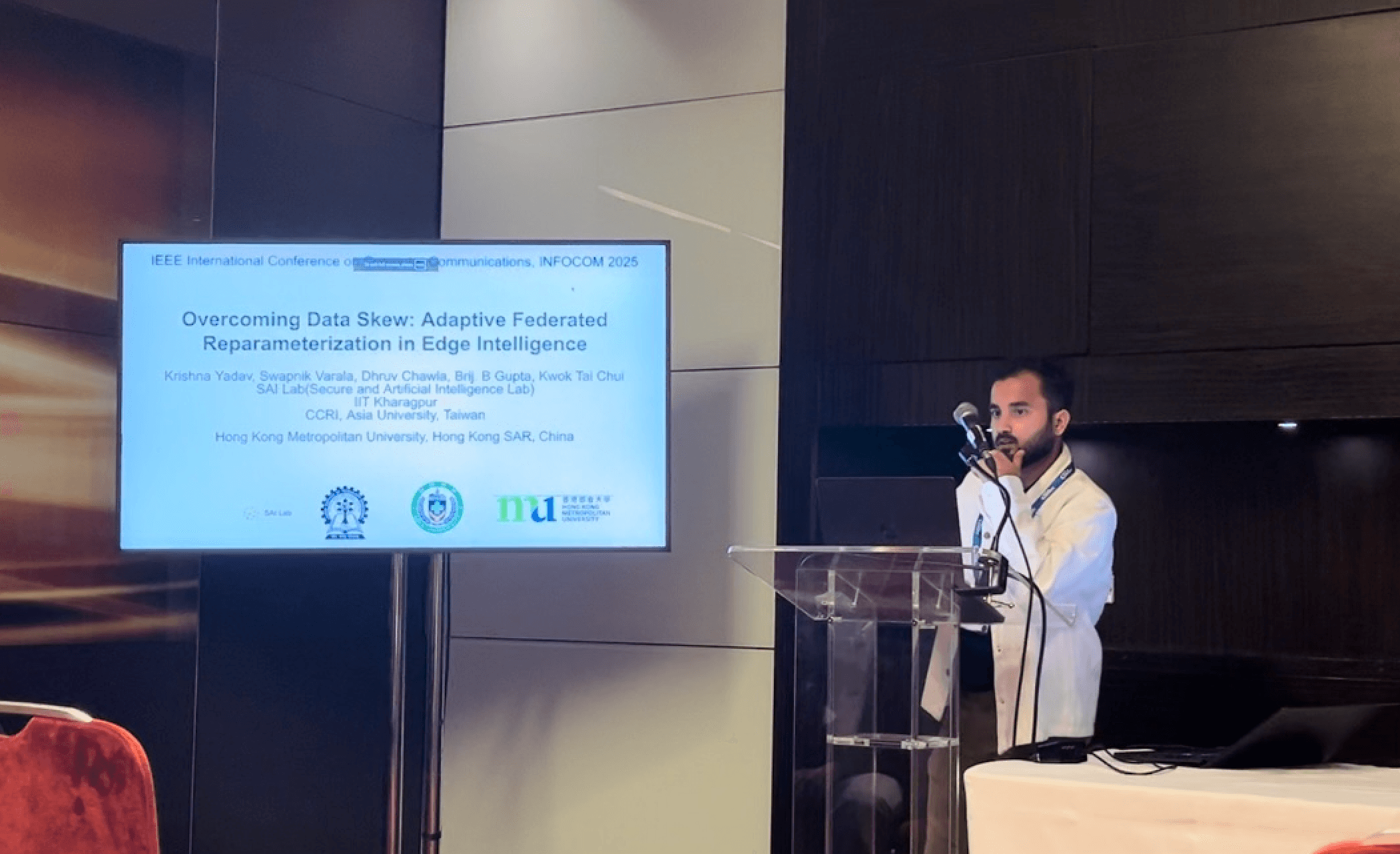
Federated Machine Unlearning
In next-generation networks, the integration of edge intelligence and large models has transformed real-time applications such as intrusion detection and anomaly monitoring. However, standard federated learning approaches (e.g., FedAvg) struggle with data heterogeneity across edge devices, often yielding suboptimal performance—especially for minority classes. To address this challenge, we propose an adaptive reparameterization framework called FedGRAA (Federated Gradient-based Adaptive Aggregation). FedGRAA employs an adaptive, gradient-driven weighting strategy that dynamically adjusts each edge device's contributions based on its data distribution, ensuring that clients with smaller datasets still wield a meaningful influence on the global model. This design not only enhances detection accuracy for underrepresented classes but also preserves data privacy by keeping raw data local to the devices. Experimental results show that FedGRAA outperforms FedAvg, increasing accuracy from 80% to 88.88% for minority-class detection. Our findings highlight the importance of adaptive reparameterization in advancing federated learning for edge devices within the evolving landscape of next-generation networks.
Technologies Used
Impact & Recognition
First-of-its-kind solution for privacy-compliant machine unlearning
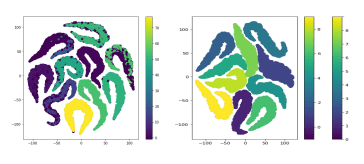
Vertical Federated Learning
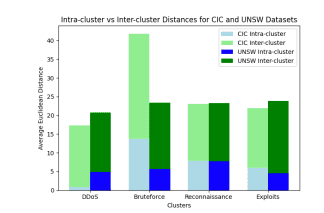
Federated learning has emerged as a promising solution for collaborative learning of IoT-based attacks without requiring data sharing. However, system heterogeneity among IoT devices results in diverse feature spaces due to varying device types, protocols, and data formats. This leads to differences in how attacks manifest across devices, causing traditional FL systems to struggle with feature space alignment and model convergence. While common attacks exhibit diverse feature spaces, they share fundamental characteristics. To address this, we utilized an autoencoder at the client side to find an optimal latent representation that captures attack similarities, transforming heterogeneous feature spaces into a uniform latent space. Using the CICIDS 2017 and UNSW datasets, we demonstrated that this approach not only resolves feature space diversity but also enhances model performance, outperforming individual models in 75% of classification scenarios through improved capture of shared attack characteristics.
Technologies Used
Impact & Recognition
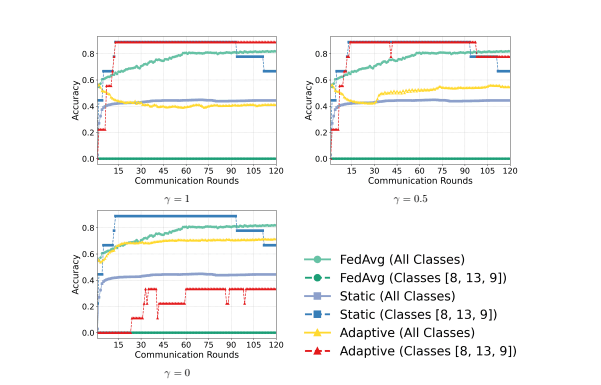
Adaptive Federated Reparameterization
In next-generation networks, the integration of edge intelligence and large models has transformed real-time applications such as intrusion detection and anomaly monitoring. However, standard federated learning approaches (e.g., FedAvg) struggle with data heterogeneity across edge devices, often yielding suboptimal performance—especially for minority classes. To address this challenge, we propose an adaptive reparameterization framework called FedGRAA (Federated Gradient-based Adaptive Aggregation). FedGRAA employs an adaptive, gradient-driven weighting strategy that dynamically adjusts each edge device's contributions based on its data distribution, ensuring that clients with smaller datasets still wield a meaningful influence on the global model. This design not only enhances detection accuracy for underrepresented classes but also preserves data privacy by keeping raw data local to the devices. Experimental results show that FedGRAA outperforms FedAvg, increasing accuracy from 80% to 88.88% for minority-class detection. Our findings highlight the importance of adaptive reparameterization in advancing federated learning for edge devices within the evolving landscape of next-generation networks.
Technologies Used
Impact & Recognition
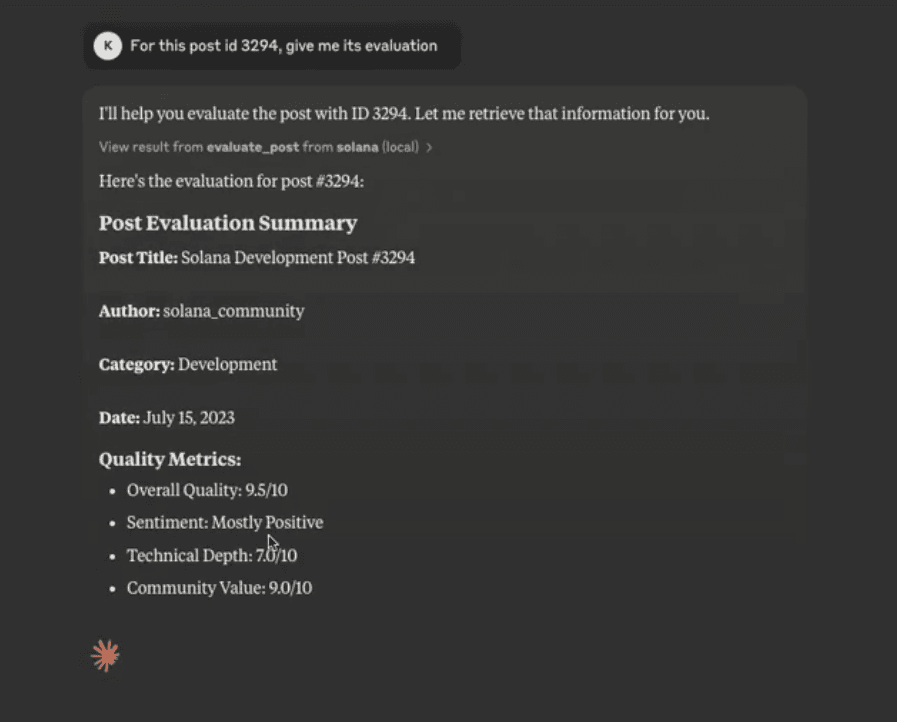
MCP server linking Solana forums with AI to enhance the Solana dev experience. Track, summarize, and evaluate proposals instantly
Technologies Used
Impact & Recognition
Revolutionizing developer experience in Solana ecosystem through AI-powered proposal tracking
Research Impact
These flagship projects represent breakthrough contributions to federated learning and privacy-preserving AI
4
Top-Tier Conferences
400+
Total Citations
8+
Industry Adoptions
Professional Experience
Building innovative AI solutions across startups and enterprises
Polkassembly
Founding AI Engineer
Multi-Agent SDK Development: Lead cross-functional team of 4 engineers developing comprehensive multi-agent SDK featuring persistent memory from user interactions, microservices architecture, user registration and authentication systems, intelligent coordination layer for agent communication, built-in guardrails for safety, and dynamic query routing across microservices
AI-Powered Content Generation: Developed intelligent meme generator leveraging 2,200+ templates with automated template matching through similarity search, text preprocessing and cleaning algorithms, bounding box detection for optimal text placement, and adaptive logic handling for non-standard image inputs
Product Innovation: Architected and deployed autonomous multi-agent delegate system for Polkassembly governance, featuring integrated chat platform that improved proposal success rates by 40%
Performance Optimization: Developed GPU-accelerated controllers for constrained LLM output generation, achieving 3X reduction in conversational turns and 2X improvement in token utilization across LLAMA 7B, Mistral 7B, and Phi3 models
Data Pipeline Development: Implemented end-to-end automated sentiment analysis pipeline processing 6,000+ crypto news articles using BERT, integrated with Binance trading platform achieving 77% prediction accuracy
Cross-Platform AI Engagement: Built and scaled intelligent conversational system across Telegram, Slack, Instagram, and WhatsApp, enabling users to create custom character files with defined personas, generating personalized engagement experiences that increased user interaction by 60% across all platforms
Zyod
Machine Learning Engineer
Computer Vision System: Developed production-ready image search engine processing 18,000+ images using ResNet-50 architecture for feature extraction, enabling real-time similarity matching with 95% accuracy
Large-Scale Data Processing: Engineered robust data pipeline scraping and processing 400K+ images from major e-commerce platforms, building custom CNN model for real-time attribute extraction achieving 83% accuracy across 50+ features
Algorithm Optimization: Implemented tree-based image retrieval algorithms, reducing inference time by 8X while maintaining recommendation accuracy, enabling sub-second response times
Machine Learning Innovation: Developed k-means clustering model for fabric and style differentiation using advanced distance metrics, improving product categorization accuracy by 25%
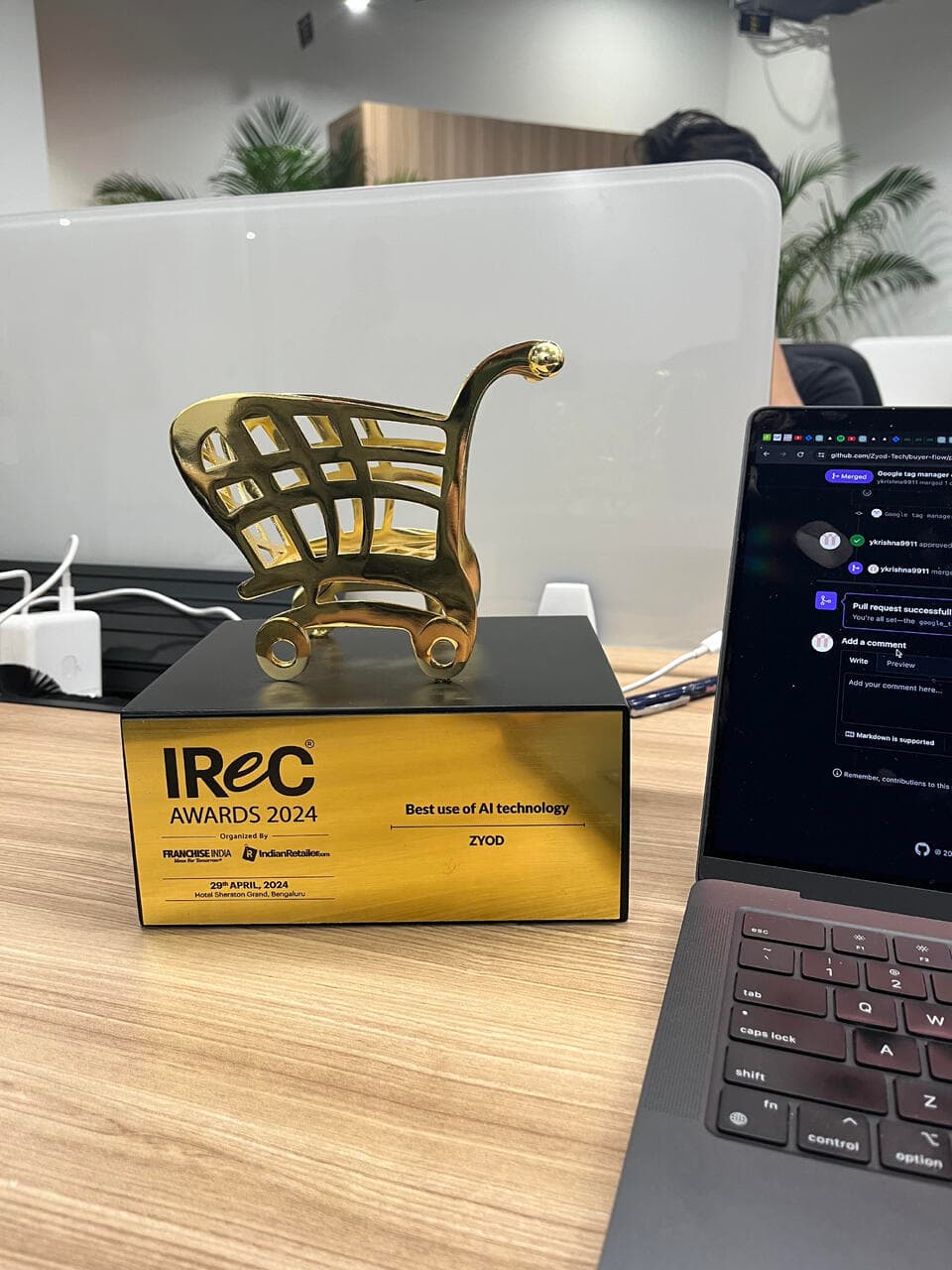
Industry Recognition: Awarded Best Use of AI Technology at IREC Awards 2024 for developing innovative AI solutions that transformed e-commerce product discovery
Clearwater Analytics
Software Engineer
Software Quality Enhancement: Led comprehensive testing initiative for Project Phoebe, writing extensive unit tests that increased code coverage from 30% to 81% across 7,000+ lines of code, significantly improving system reliability
Cross-Functional Collaboration: Collaborated with product, engineering, and business teams on critical financial data analytics and reporting systems, reducing report generation time by 50%
Research Experience
Advancing the frontiers of AI through cutting-edge research
Founder and Principal Researcher
Leading research initiatives in federated learning, cybersecurity, and AI safety. Established and manage a research lab focused on developing secure and robust AI systems with applications in distributed learning environments.
Federated Learning
Privacy-preserving distributed machine learning, adaptive algorithms, and system heterogeneity solutions
AI Safety & Security
Adversarial attacks, data poisoning detection, and robust AI system development
Multi-Agent Systems
Multi-agent systems, resource optimization, and distributed computing at the edge
Research Impact
Contributions to the global research community through high-impact publications
400+
Research Citations
5+
Published Papers
A*
Top-tier Conferences
Publications
Peer-reviewed research contributions in top-tier conferences and journals
A Novel Data Poisoning Attack in Federated Learning based on Inverted Loss Function
A novel approach for phishing URLs detection using lexical based machine learning
5+
Publications
400+
Citations
2020-25
Active Years
A*
Top Venues
Honors & Awards
Recognition for excellence in research, innovation, and leadership
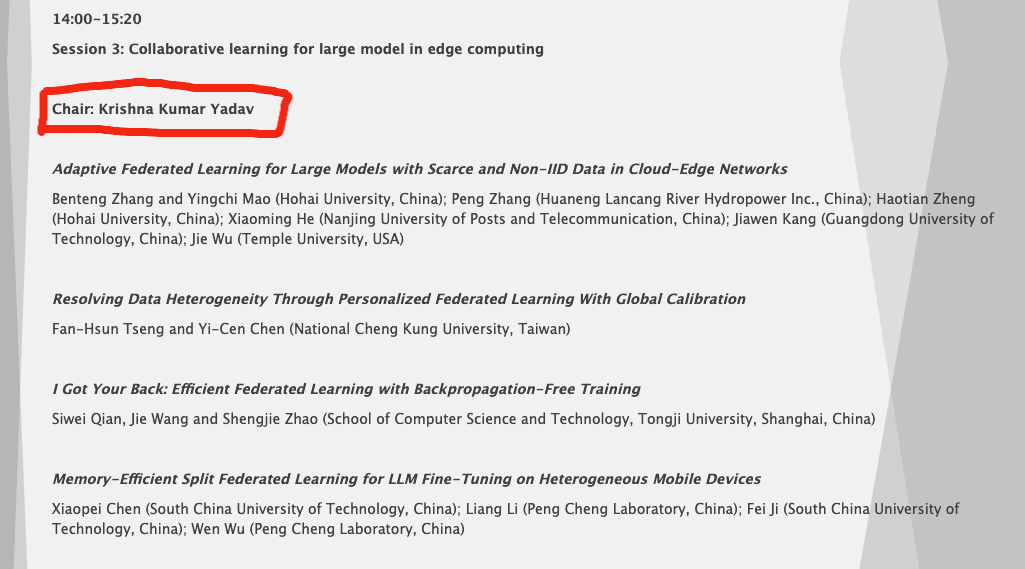
Session Chair - INFOCOM IEILM Workshop 2025
Served as session chair for federated learning and edge intelligence track
Honourable Mention - Solana and Crossmint Hackathon
Awarded for developing MCP server during hackathon
🐦 Featured Tweet:
View Solana MCP Tweet with Video →Multi-Agent Delegation System Award
Awarded USD 5,000 for developing autonomous delegation system
Best Use of AI Technology - IREC Awards 2024
Awarded for developing advanced AI solutions at Zyod that transformed e-commerce product discovery
First Student Publication Recognition
Honored by NIT Kurukshetra Computer Engineering department for being the first student from 2018-2022 batch to publish a peer-reviewed journal paper indexed in SCI
5+
Awards Received
$5K
Prize Money
2025
Session Chair
First
Student Publication
Technical Skills
Comprehensive expertise across the AI/ML technology stack
Machine Learning & AI
Programming Languages
ML Frameworks & Libraries
LLM & GenAI Tools
Vector Databases & RAG
Cloud & DevOps
Databases & Tools
Specialized AI Skills
Web3 & Blockchain
10+
AI/ML Technologies
5+
Programming Languages
15+
Frameworks & Tools
3+
Years Experience
Get In Touch
Let's collaborate on cutting-edge AI research or discuss exciting opportunities